

Episodes of my podcast series: 99 - a Weekly 9-Minute Spiritual Journey
artistic image of two hands linked symbolizing passionate connection
99

Rediscovering God through Your Desire

This entry is part 5 of 33 in the series 99: a journey

In Arabic there is this word, Ya Wadud, which translates as Divine love. To me, this kind of love is the most powerful, least disguised, and even a little scary. The kind of love this is talking about includes sexual intimacy. (I know, right?!). If you’re like me, using the words sex and love and the divine in the same sentence feels a little off limits. I mean, growing up in European-centered culture, the divine is code for “God” and whether I believe this or not, the face of God is culturally programmed to be an old white guy with a beard. Eww. Let’s back up for a minute. This series isn’t about God – especially the old white one. It’s about you. We’re exploring these traits in each of *us* and how they inform the way we interact with the world. So, this love – this sexual longing and hunger. Let’s spend a moment with Rumi, one of the great Sufi mystics and masters, who wrote: Desire I desire youmore than foodand drink My bodymy sensesmy mindhunger for your taste I can sense your presencein my heartalthough you belongto all the world I waitwith silent passionfor one gestureone glancefrom you” Have you ever felt this kind of longing? I have. It feels intoxicating and dangerous and scary, but in a thrilling way—like you might just throw it all away for one chance- for a moment with the object of your desire. The scary part, for me, is wondering – “what if I did throw everything I’d ever worked for away for this moment… AND IT WAS WORTH IT? What then? One moment of love and passion so intense that it’s worth everything? Yeah, I’ve thought about it. Ya Wadud is about tapping into that energy – connecting with it, rather than pushing it away. What if you could have that moment of love? Of lust? Of connecton so powerful, it sweeps you away? …and you didn’t have to give anything away. Except Your heart? See why this is scary stuff? Here’s another poem by Mewlana Jelaladin Rumi: Be helpless, dumbfounded, Unable to say yes or no. Then a stretcher will come from grace To gather us up. We are too dull-eyed to see that beauty If we say we can, we’re lying. If we say No, we don’t see it, That “No” will behead us And shut tight our window onto spirit. So let us rather not be sure of anything, Besides ourselves, and only that, so Miraculous beings come running to help. Crazed, lying in a zero circle, mute, We shall be saying finally, With tremendous eloquence, Lead us. When we have totally surrendered to that beauty, We shall be a mighty kindness. At this point, my friend, are you hopelessly confused, or uncomfortable or intrigued? Good. That’s one of the invitations Ya-Wadud has for us. What does it mean to surrender to the deepest, most primal emotions inside us? What would it be like to allow ourselves to REALLY feel all the emotions that live in the deep, dark places we don’t want anyone to see? Love. A love so sweet, and so unconditional, that it knows. It knows all the things that human beings have ever been ashamed of. It knows all the things you’ve ever longed for. And it’s still there. Waiting patiently for you to open yourself and let it out.  Rumi says that “when we have totally surrendered to that beauty, we shall be a mighty kindness.” Do you think he knew that the more we’re able to love ourselves unconditionally – the kinder we become toward others too? Do you think he knew that you long for – hunger that person? and that this hunger is a normal and natural thing, perfectly worthy of being loved too? What if, instead of trying to control our emotions, and viewing them as a sign of weakness…. what if you were able to let them flow and FEEL their power. Be mindful if you are in a position of power over someone. This is not permission to harm. Rather, it’s an invitation to welcome ALL of you, and one piece of this lesson is about relationship: exploring, and inviting, and accessing this intimate, profound, and powerful connection to the divine IN YOU – through another person. It’s also about accessing this connection in THEM… My friend, a spark of the divine lives in YOU. It lives in each of us. This is an invitation to get out of your own head, and experience the divine with all your senses… sight, smell, taste, touch, sound. I have one more quote for you. This time from the historian and activist Howard Thurman who said, “Don’t ask what the world needs. Ask what makes you come alive. Because what the world needs, is more people who have come alive.” The body is more than a vehicle to carry the mind around. It is also a sacred temple of great joys and a pathway to the very heights of your being. Welcome home.  99: a journey Wake Up to the Abundance All Around You! Some Advice from Job about your Suffering

Read More »
2 white young girls drinking clear water flowing from a pipe on a green blurred background.
99

How to Never Run Out of Love

This entry is part 29 of 33 in the series 99: a journey

I want YOU to want ME. That’s a great song by the band Cheap Trick. It’s also the source of so much misery I can hardly believe it. Those words may be the source of anything that’s wrong with us as a society. Ok. I might be exaggerating a little, I’m also serious. See this week’s episode gets its start from the qualities behind the word, Al Mu’izz, and I’m using a translation of that word that means something like “giver of praise or self-esteem.” It’s one of the 99 names of the divine and it’s talking about a quality of G-d that gives us self-esteem. If you’re new to this series, you may not know that I never make assumptions about what you believe – or If a belief in a God has any part of what keeps you going. Whatever you believe, where does your assurance and comfort and self-esteem come from? Have you always felt confident and assured from as far back as you can remember? Are you a compulsive pleaser—needing to be liked at almost any cost? Are you defensive and guarded—just sure that people will hurt you if you give them a chance? Think about where those parts of your personality come from—where they got their start. It’s possible you were just born lonely, or confident, or whatever. And it’s also possible that part of this is a sort of programming, from your earliest time in this life. Maybe it was a mother figure, although not everyone has one of those. Maybe it was a group that made you feel secure and loved. Maybe your religion or spirituality is such that you can feel the love of a god. I’m convinced that we’re all just searching for someone to love us. Now sure, that may be overgeneralizing just a little, but think about it – this seeking of external validation -could explain a LOT. It could have something to do with a divorce rate that seems so high. If two people decide to marry young, before they’re fully figured out who they are, there’s a good chance that at least one of them will be seeking approval and love and validation from someone other than themselves. This might be fine if it’s not the *only* source of love and validation, but what if it *is*? It could have something to do with the rate of addiction we face: Drugs, alcohol, social media, food, sex, video games, religion — all are things that can provide pleasure. If our relationships with these things are healthy, they can be part of an overall picture that works. What about when we use them to make up for something that’s missing, though? What about when we feel out of balance though? When there’s something missing – like a giant hole in us that we can’t seem to fill, no matter what we put in it? For me, it was – and is – an addiction to work. I used to work 70 or 80 hours a week, moving up the corporate ladder. I learned that I could be successful in that environment, and the rewards felt good. Money, recognition, promotions, nice cars, a big house, and the trappings of success. At some point, though, I recognized that I was out of balance. Instead of being my own source of self-worth, I found ways to be useful enough to *other* people, that they would then tell me how great I was, or how nice, or how smart, etc. I eventually figured out, though, that this was just a way of distracting myself from the uncomfortable truth. I didn’t know how to love myself – how to find a wellspring of worth, and hope, and value INSIDE me. I never knew that there was a way to find a deeper and inexhaustible supply of love and praise that was always there – and I could access whenever I wanted! Now don’t get me wrong- I don’t suggest you quit your perfectly good job and sell all your belongings and set out on a pilgrimage of the soul like I did five years ago. In fact, I’d recommend against it. While I wouldn’t trade this experience for anything, I can tell you that the answer I was looking for all this time was right there all along. Also – it’s not as if I have life all figured out… Hot Mess is my middle name. But I’m learning how to be okay with hot mess – in fact, I’m learning to LOVE it… because it’s MY hot mess, and I’m learning to love ME. What’s yours? Have you found the source of your own strength and courage? – the one that you carry with you and that never runs out? Are you still in search of it? Or maybe you haven’t even thought about it until now. Whatever the case, remember – we humans are meant to be in relationship with each other. We NEED each other. At the same time, it all starts with you. If you can’t love yourself and have to try to meet that need from OUTSIDE you, it may never work. If that’s the case, I send you comfort. But you can send you comfort too. In unlimited amounts, any time you wish. You just need to find the keys to that castle inside you. 99: a journey The Antidote to Your Inner Critic WTF?

Read More »
white scrabble tiles on a corkboard background spelling "Destiny"
99

Some Advice from Job about your Suffering

This entry is part 6 of 33 in the series 99: a journey

This week’s message is just for you if you’ve ever wondered why bad things happen to good people. It’s inspired by the Arabic Ya-Adl, meaning something like just mercy, but in a meta sense that also is about balance, and flow, and a sort of cosmic or divine evening out of things that are way beyond our ability to grasp. Here’s a quote by Paulo Coelho from his book, By the River Piedra, I Sat Down and Wept: “Joy is sometimes a blessing, but it is often a conquest. Our magic moment helps us to change and sends us off in search of our dreams. Yes, we are going to suffer, we will have difficult times, and we will experience many disappointments — but all of this is transitory it leaves no permanent mark. And one day we will look back with pride and faith at the journey we have taken.” Those words are comforting to me. Are they to you? “One day we will look back with pride and faith at the journey we have taken.” I believe that I should NEVER tell someone else how they should feel about an experience—how to grieve, or when pain or loss translate to suffering. Although Paolo Coelho does exactly that in his book, and I want to think all suffering has meaning, if you’re suffering, that’s something only you can decide. I want to share a story about justice, about mercy, and about suffering. Many years ago, when I was in my late teens, I worked long hours as a locksmith. By the way, if there’s one person in this world who gets to see people in their lowest moments, it’s a chaplain. Standing nearby, though, is a locksmith. That’s for another day though. On this hot, August afternoon in the Midwestern United States, I had just finished working outside for twelve or thirteen hours in unbelievable heat of around ninety-five degrees Fahrenheit and eighty-five or ninety percent humidity. I was hot, dirty, and exhausted. All I could think of was getting home to shower, change clothes, and cool off in the air-conditioning. Stuck in a traffic jam, I was already frustrated when another driver in a light-blue sedan cut in front of me in order to make a left turn through the traffic jam. I exploded in rage, yelling and cursing out the window and flying a one-fingered salute as the driver pushed through and disappeared down a side street. About five minutes later, I was beginning to forget about the incident when I heard the screech of braking tires on pavement and became aware out of the side of my vision that this familiar-looking blue car had slid to a stop beside me. My windows were already down because I didn’t have AC, and I’ll never forget the driver’s face as he rolled down his window and lifted a pistol up to rest on the opening. The nickel-colored pistol was pointed directly at me and the man said, “do you want to live?” “I’m sorry,” I said. I’m just trying to get home. I watched the muzzle of the weapon quiver almost imperceptibly back and forth. It was like it was a part of him, and the whole package—the man AND the weapon—was animated with a rage so powerful, that I can still feel it. After what seemed like hours, but was probably only a handful of seconds, the man pulled the weapon back down and said, “you be careful how you act. You never know what somebody’s been through. You just might not make it home.” He drove off and left me alone with my nerves. What I remember most about that day was wondering just what it would take for ME to reach that point. I’ve never been all that religious, but for some reason, I thought about the stories from the Hebrew Bible of Job and all his suffering. Was I suffering? Yes, I certainly thought so. Was this man suffering? Almost surely, he was – or he had before to lead up to that moment. Years later, I watched the movie “Crash,” starring Don Cheadle and it instantly made me think of this man. In the movie, tons of seemingly random and tragic events are masterfully stitched together in ways you would never expect. Seemingly evil characters are shown in a different light in that movie. I imagine that the man driving that car was kind of a modern-day Job. In fact, maybe that’s what I’ll call him from now on. “The day I met Job.” Why do bad things happen to good people? Why do good people do bad things? Is there such a thing as a bad person or a good one? Or are we all just here, living this life from one choice to the next choice, following a path that’s already decided? Whichever you think it is, I wish you well. And when you’re late to pick up your child from daycare and cut me off, I hope I remember that each of us is Job at one time or another and to show mercy. You never know what battles someone else had to fight just to be here. That day didn’t turn into tragedy, but it could have. If he had pulled that trigger, would my suffering have had meaning? I don’t know. It’s easy to vilify him and declare outrage and say that he should be punished for this crime. It’s easy for me to see myself feeling hatred for him. But what if he had already been punished BEFORE he did this? What if his suffering was already happening? What if Job’s God had forsaken him and he had nothing left to live for so that when this snotty privileged white kid insulted him, it was the straw that broke the camel’s back? 99: a journey Rediscovering God through Your Desire The One Person You Must Meet

Read More »
White mom's hands holding child's hands
99

The Antidote to Your Inner Critic

This entry is part 28 of 33 in the series 99: a journey

This episode of 99 is bright and happy. Are you ready? You’re not smart enough. If you’d only try harder you’d get ahead. Why did you do such a stupid thing? I told you that being a teacher was a bad idea. You’ll never be… Oh wait. That was my internal critic talking to me… could you hear that too? Ehem… This week we’re talking about the Forgiver…. From one of the Arabic names for the Divine – Ya Ghaffar. I’m told that this name shares linguistic roots with beeswax – a substance that gets used as a salve or like a soothing lotion for dried, cracked skin. If your internal critic is anything like mine, dried and cracked is a pretty good way to describe the effect it can have on me, so I love this notion of an antidote. What is it about forgiveness that makes it easier for us to forgive someone else than ourselves sometimes… not always? One book that I often turn to when I’m writing these episodes is called “Physicians of the Heart: A Sufi view of the 99 names of Allah. About this name, it says that the kind of forgiveness of Al Ghaffar is inexhaustible and repetitive. Inexhaustible and repetitive. Exactly like my own criticism – only – better! Thinking about that special beeswax salve that shares the same name is kind of lovely, actually. I remember an old baseball glove I had when I was a kid. When I first got it, it was very hard leather. I spent an entire winter getting it ready for the coming baseball season by oiling it, binding it up tightly with a baseball inside it, and basically massaging it every day to make it soft and conform perfectly to me. That old saying, “it fits like a glove” – well yeah. After all that care, that glove was soft and moved in just the right way, and it was an extension of ME. Think about a forgiveness – that you have access to give yourself – that works in this way. No matter how unkind you are to yourself, no matter what you’ve done, or whatever the regret, wouldn’t it be nice to be able to invoke this healing balm? This poem is often attributed to Rumi: “Come, come whoever you are… wanderer, worshiper, lover of leaving. It doesn’t matter. Ours is not a caravan of despair. Even if you have broken your vows a hundred times. Come, yet again come.” How can you NOT be moved by those words? Rumi, or whoever wrote that, was talking about forgiveness and finding your way back to Allah’s love. I’m not here to talk about anyone else’s love – I’m talking about your self-love. Maybe Rumi’s meaning and mine are really the same, or maybe not. But don’t forget to be your own biggest fan. I’m fairly certain you are your own biggest critic as well, so it’s only fair, right? Don’t be boastful, or fake, or obnoxious. Just be kind. To yourself. Practice putting forgiveness on the wounds that your own harsh thoughts have caused. Heal the cracks in your soul and allow it to soften until you’re comfortable in it. Feel how your soul is really YOU – at the deepest level….. how every thought you have, and fear you have and every action you take shapes you. Just like that baseball glove, be mindful of what you put on your spirit. Be mindful of how you treat it. The other day, when I was working at a hospital and was checking in on a family who had a very sick child, I could see how the kiddo was in bad shape, but was the center of attention. This person was the focus of so much love and care, it was astounding. At the same time, the parents were being so hard on themselves. They blamed themselves for not being able to make it better for their little one. I could just feel the inner critics of both these beautiful, concerned people tearing them apart for their failures. I can’t live anyone’s life for them. I can only offer comfort and guidance based on what I know – and in that moment, I know those two parents were feeling nothing but love for their child… I reminded them to breathe. To look at each other and notice the strength and the care and the kindness overflowing from each of them. I reminded them that they were no good to anyone if they didn’t also take care of themselves. My friend, I don’t know what battles you face, or what lies ahead for you. I do know that you are not alone. I know that you are amazing and strong and kind in ways that no one may ever realize, but YOU realize it. Amid the criticizing you do, remember to also forgive yourself. Do it now, and five minutes from now, and for the rest of your days. You deserve it. 99: a journey Solstice Greetings from the Sofa How to Never Run Out of Love

Read More »
Recent Episodes of my Podcast. Interviews, random musings.
Head and shoulders photo of a smiling Ann Marie seated on a beige sofa against a calm, clean neutral-colored background Photo is taken from slightly above.
Podcast
Andrew

Raising Sparks: An Interview with Ann Marie Coletta

Welcome to another special Interview Episode of Prolificate where we get to hear from Ann Marie Coletta, the fierce and authentic founder of Raising Sparks Interfaith Ministry in one of San Francisco’s toughest neighborhoods, The Tenderloin. Ann Marie is one of the most moving interviews I’ve done, and for good reason. She has a way of sharing her experiences – which are incredible and can be a little scary – with a gentleness and care that’s unlike anyone you’ll ever meet. She has been there, and done that for over twenty years as an all-star social worker, practicing Zen Buddhist, and a recovering alcoholic who tells it like it is. I hope you appreciate this as much as I did. Enjoy. If you want to connect with Raising Sparks, you can find their website (coming soon at the time I’m writing this) at https://raisingsparksinthestreets.com/. Their phone number is (415) 933-5955 or email raisingsparksinthestreets@gmail.com Blessings to you for listening and caring. Blessings to Ann Marie and those she is walking with. Don’t forget, that a prolific world includes each and every one of us. May we both be encouraged by this story. Go out into the world in peace and have courage Hold on to what is good Return to no person evil for evil. Strengthen the fainthearted, Support the weak. Help the suffering, and honor all beings. Including you.

Read More »

Notes from the Field: Elation and Disappointment

I keep making these recordings as I leave the hospital to capture what I’ve experienced. While I cannot share any identifying details to protect patient confidentiality, it feels important to remember these experiences. Today, I realize that I have a favorite patient – even though you’re not supposed to. The reality of the situation felt really raw, so of course, I had to record it. Turns out Chaplains are people too. 🙂

Read More »
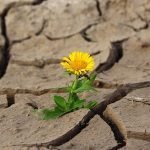
a little yellow flower growing from cracked, dried up mud
Podcast
Andrew

Ashes, Dust, Tears, and Laughter

This is a short update after a really intense week. I have been serving as a chaplain at a local hospital, and the experience has been so intense, I just had to share what it’s like. (Don’t worry, it isn’t all sad, but it IS powerful). Some brief notes from the podcast episode: Ash Wednesday – “According to Rabbi Bunim of P’shiskha, everyone should have two pockets, each containing a slip of paper. On one should be written: I am but dust and ashes, and on the other: The world was created for me. From time to time we must reach into one pocket, or the other. The secret of living comes from knowing when to reach into each. The quandary of interfaith chaplaincy to a variety of people Dispensing wisdom vs serving             Rachel Naomi Remen’s article: Healing vs Fixing vs Serving How to pray – when that’s something that’s been hard for me to do in the past.             Ironically, it hasn’t been that hard with patients.

Read More »
unlearning everyday racism
Podcast
Andrew

Unlearning Everyday Racism

I recently spoke with Kalissa Scopes of Unlearning Everyday Racism. This was, at times, an emotional interview (for me). Not to spoil this, but toward the end of our conversation I ask Kalissa what she’s most afraid of. What she answered was profoundly moving.

Read More »
Blog Posts and other special features

On the way. Wednesday, May 15th. Miami Airport.

https://www.listeningtoayahuasca.com It’s Wednesday, May 15th, 2024. I’m sitting in the Miami airport and am halfway through my 3-day “planes, (no) trains, and automobiles” journey to Gaia Sagrada retreat center outside Cuenca, Ecuador. 

When I get there, on Friday, I’ll have a day to settle in before we get started with the 12-day retreat. 

Because I’ve heard so much about this plant medicine and its intensity, I’ve been trying to prepare myself by reading about other people’s experiences. I’ve also been doing my best to heed their advice and tips.

Like many things, I’m probably overdoing the buildup for this experience, but I suppose it’s one way I deal with the unknown: There’s a part of me (named Atlas) whose job it is to try and anticipate all the things that might happen and to be uber-prepared for any of them. Atlas honest-to-God packed a Phillips screwdriver for this trip to the Andes. (It makes perfect sense once you think about it). At any rate, Rachel Harris’ book is so far an interesting compilation of her personal experiences as well as those of her patients over many years of studying the kinds of healing, recovery, and psycho-spiritual breakthroughs that are possible. Maybe give it a read or listen. I’ll be staying the night in Quito before catching another flight to Cuenca – a smaller colonial town of ~ 600,000 people up in the mountains. Ciao.

Read More »

An Update

Thank you for your support. Really.  Since my son Dillon’s series of seizures on April 17th, and his few days in hospital, he has been steadily recovering. In some ways, and to someone who has never met him, he appears completely normal.  He tells another story though. Although each day is a little better than the one before, and he hasn’t had any more seizures, his brain is still not what it was… agile, responsive, and capable.  He is back to working a light/limited schedule helping his boss with the administrative bits of running several restaurants.  He seems to have received this as a wake up call and reminder that life is short, precious, and unpredictable, and to make damned sure he’s living in a way that matters to him.  I’m grateful he’s okay, and your prayers and kindness continue to be needed and appreciated. As the initial crisis phase of this whole thing tapers off, I’m increasingly aware that I have work to do with my own spirit. At this point in my life (like many folks), I’ve been through things that have buckled my knees and bent my spirit into the funny and unique thing that it is today. Yes, I’ve been resilient and blessed in many ways. And. This feels like a section break in my life’s story… that blank page in between where it’s a good time for a drink refill and a bathroom break. Although I’ve done a fair bit of self-work (I have an impressively thick stack of therapy receipts at this point), the truth is that it’s time for me to take a step forward in examining my fears and the collage of scars and duct tape that has carried me through two divorces, the loss of my kids’ mom to suicide, and a few other loop-the-loops and barrel rolls along the way.  I’m aware of the fleetingness of life…. that my life (or anyone’s) could end at any point (mine hopefully in such outrageous fashion that folks at my memorial will be straining to hold back laughter….. taken out by a falling blue chunk of ice from an airplane toilet anyone?).  Gallows humor aside, I also want to be prepared so that if I happen to live for another few decades, I’m not causing nightmares to those around me because I’m such a suppressed mess!  Since leaving my most recent job at The Chaplaincy Institute, I’ve been taking time to rest, meditate, exercise, attend some art therapy sessions, generally turn inward, and tend to what I find there. As I do this, I’m finding myriad more questions. To that end, I’ve decided to do some solo travel to South America starting about a week from now. I’ll first be heading to Ecuador for a retreat with ayahuasca and San Pedro plant medicine healers to help in the process of self discovery.  Who knows what the future holds, but if I have one bit of advice, it is this:  Do the thing you are here in this life to do. Ask the questions you’ve been afraid to ask. Give the hugs that would be awkward but you’d love to give. Say the things out loud that you haven’t had the time or courage to say. Hold yourself (and me) accountable to living a life of meaning – whatever that might look like to you.  If you’re reading this, you’ve had a part to play in my story. You may not know that it’s an important part, but it is. I appreciate you. I listen and learn from you. I value your time and friendship, and I look forward to the next time our paths cross.  Until then, thank you for caring, following along when the plot gets weird, and showing up for me. May you experience how good that support feels. A thousand times over. In gratitude.  AC

Read More »
Various faces in a crowd
Blog
Andy

Immigration: gender matters.

This entry is part 5 of 5 in the series Immigration

Immigration Series: Part V For this final installment, I want to look at gender and how it interplays with immigration. Perhaps it would be helpful to clarify the baseline definition of gender. The following is adapted from the Apple dictionary entry: Gender: “either of the two sexes (male and female), especially when considered with reference to social and cultural differences rather than biological ones. The term is also used more broadly to denote a range of identities that do not correspond to established ideas of male and female:” Although the words gender and sex are often used interchangeably, they have slightly different connotations; sex tends to refer to biological differences, while gender more often refers to cultural and social differences and sometimes encompasses a broader range of identities than the binary of male and female. “What does gender have to do with someone moving from one country or culture to another,” you ask? Let’s take a look, shall we? The first thing that comes to mind is that in many cultures that are heterosexual and patriarchal, there are clearly-defined roles for men and women. Around the world, the poorer and more strongly patriarchal the society is, the (disproportionately) worse women fare in terms of health. Often, women are expected to take care of the rest of the family by cooking, cleaning, and meeting household needs like gathering wood or fuel for cooking and cleaning in addition to then leaving for a long day of working outside the family for money. Those women then return after long days only to have to prepare meals and wash clothing for the family members to prepare for the next day. It’s not hard to imagine why a woman would want to emigrate– to leave a situation like this for better opportunities, and many do. On the immigration side, gender roles influence the way that people are perceived in the host society. If the receiving society is heavily patriarchal, then immigration of women may be viewed with less suspicion or resistance. Women often move into roles like domestic service, sex or entertainment work, and in general, may move more freely within the culture. This may lend the immigrant population a less permanent nature as the women retain ties to their home culture by remittances (sending part of their earnings back home) and continued travel / migration back and forth. When populations of men migrate, the character of the immigration is different. Men may be less likely to migrate alone and then to bring their families with them. This creates a more rooted immigrant community within the receiving culture, which may be perceived as more disruptive. In the case of family migration, women often serve as connectors within the new community which acts as a kind of glue. Bringing the family unit along from one culture to another allows for continued social and cultural events, religious observance, and a continued sense of identity, which is often fostered by women. Lastly, gender plays an interesting role when migration happens between cultures with different notions of gender. When the receiving society is less patriarchal, people who were forced to adhere to a strict binary of male/female in the old culture may feel free to “come out” in the new one. People who are non-binary, gender-fluid, or trans-gender may find themselves able for the first time to claim an identity that previously had to be suppressed or hidden. Conversely, migrating from a more liberal society to a more conservative one may force people to hide parts of their identities to conform to more rigid expectations around gender. While this might seem like a curiosity on the surface, it can be a life-threatening reality for many when examined more deeply. Again, stories can be apparent and operate as obvious public narratives. For many of us, stopping at this level of understanding is all we feel necessary. When something doesn’t make sense, however, it is often by looking beneath the surface for the hidden narrative that we can find answers (or at least more helpful questions). How do you experience immigrants? Are they immigrants or are they people who migrate? How does the story of your life intersect with the story of theirs? What would it take to make you leave your country, culture and relationships behind to move to a new country? Would you have the courage to do it? Would you take your religion or your food or your music with you or would you try to assimilate to the new place? We haven’t covered politics or the arbitrary idea of nation-states as ways to divide the world, but those ideas are just as complicated, with surface stories and hidden stories of their own. Any way you examine the issue, it appears that human beings have certain needs that must be met. It is in the ways we meet those needs that we differentiate ourselves. I have found this look at immigration helpful, and I hope you have too. May we both be reminded that humans have far more in common than the things that make us different. May we be curious and ask the question “Why?”more often instead of simply accepting the narrative that our own cultures provide us. May we ask ourselves,“What would I do?” when we are puzzled or frustrated with someone different than we are. I leave you with a quote from the Sufi, Hazrat Inayat Khan: “I wandered in the pursuit of my own self; I was the traveler, and I am the destination.” Whether traveler, expatriate, immigrant, or emigrant, may we each remember that we are all searching for something. Be curious. Immigration Why do Immigrants bring their religion with them?

Read More »
Wheel of religious symbols
Blog
Andy

Why do Immigrants bring their religion with them?

This entry is part 4 of 5 in the series Immigration

Immigration Series: Part IV Immigrants are sometimes recognizable in a host society by the ways they act differently. One of the more recognizable ways of acting can be motivated by religion. I am thinking of a taxi driver I once saw stop his car, retrieve a prayer rug from the trunk, and perform salat – ritual prayer done 5 times each day by observant Muslims. Because I live in a Christian culture, this immediately triggered a story for me about who this person was and how they came to be on their knees in a gas station parking lot. This brings up a question right away: Why doesn’t the person just assimilate to the new host culture? Move to the United States (in this case), learn English, become Christian, and learn to love hot dogs, action movies, and pizza like other Americans. But wait: Pizza is Italian, though, right? Never mind pesky questions that blur the lines of my tidy narrative. We’re talking about religion. One of the ways I try to understand issues like this one – why people who immigrate don’t just assimilate – is to imagine myself in their situation. If I were Christian and my religion gave me great comfort, I would probably feel a great deal of gratitude or loyalty to it. If circumstances then changed in my own country and became bad enough that I had no other choice but to leave, it makes sense that I would take my religion with me, no? After all, my faith might be the one thing that carried me this far and gave me the strength to consider leaving my home in search of something better. Why would I abandon the very God who allowed me to survive and make this change? Although the religions might be different depending on the context, immigrants move all over the world: from Turkey to Germany, from South America to Asia, from India to Africa. It only makes sense that they would bring their religious practices with them. Imagine yourself in a strange new place where the language, the customs, and the culture are completely unfamiliar. Would you long for the comfort of the home you remember? Would you jump at the chance to create a sense of community – the familiar – among all the foreign? I would. This is why we find small, but vibrant Brazilian Catholic church communities in Japan, Korean Christian Churches in San Francisco, and Mosques in London. I have come to understand that religion is an inseparable part of culture, even for those who deny that religion. The Western calendar is calibrated off of Jesus’ birth. Our culture ebbs and flows in a yearly cycle marked by Christian festivals like Christmas and Easter (which were themselves overlaid on pre-Christian religious festivals). Our criminal courts have a jury of twelve, one representing each tribe of Israel, our Presidents place their hand on the Christian Bible to profess their adherence to its code as they are sworn into office. Religion, which means, “that to which we bind ourselves,” is yet another story with many levels. On the surface, it is often a system of beliefs and practices that one uses to be in relationship with God or some higher power. Like other cases, there is also a deeper, sometimes hidden story about not being alone.When all else fails, when everyone and everything I know has left or has changed, my religion binds me to the one thing that does not – and will not – change. Why not cast that off and assimilate to the religion of a new culture? Some do, of course, but I have to ask, “why would I?” Immigration Race & Ethnicity: our Favorite Fairytales Immigration: gender matters.

Read More »