

Episodes of my podcast series: 99 - a Weekly 9-Minute Spiritual Journey
artistic image of two hands linked symbolizing passionate connection
99

Rediscovering God through Your Desire

This entry is part 5 of 33 in the series 99: a journey

In Arabic there is this word, Ya Wadud, which translates as Divine love. To me, this kind of love is the most powerful, least disguised, and even a little scary. The kind of love this is talking about includes sexual intimacy. (I know, right?!). If you’re like me, using the words sex and love and the divine in the same sentence feels a little off limits. I mean, growing up in European-centered culture, the divine is code for “God” and whether I believe this or not, the face of God is culturally programmed to be an old white guy with a beard. Eww. Let’s back up for a minute. This series isn’t about God – especially the old white one. It’s about you. We’re exploring these traits in each of *us* and how they inform the way we interact with the world. So, this love – this sexual longing and hunger. Let’s spend a moment with Rumi, one of the great Sufi mystics and masters, who wrote: Desire I desire youmore than foodand drink My bodymy sensesmy mindhunger for your taste I can sense your presencein my heartalthough you belongto all the world I waitwith silent passionfor one gestureone glancefrom you” Have you ever felt this kind of longing? I have. It feels intoxicating and dangerous and scary, but in a thrilling way—like you might just throw it all away for one chance- for a moment with the object of your desire. The scary part, for me, is wondering – “what if I did throw everything I’d ever worked for away for this moment… AND IT WAS WORTH IT? What then? One moment of love and passion so intense that it’s worth everything? Yeah, I’ve thought about it. Ya Wadud is about tapping into that energy – connecting with it, rather than pushing it away. What if you could have that moment of love? Of lust? Of connecton so powerful, it sweeps you away? …and you didn’t have to give anything away. Except Your heart? See why this is scary stuff? Here’s another poem by Mewlana Jelaladin Rumi: Be helpless, dumbfounded, Unable to say yes or no. Then a stretcher will come from grace To gather us up. We are too dull-eyed to see that beauty If we say we can, we’re lying. If we say No, we don’t see it, That “No” will behead us And shut tight our window onto spirit. So let us rather not be sure of anything, Besides ourselves, and only that, so Miraculous beings come running to help. Crazed, lying in a zero circle, mute, We shall be saying finally, With tremendous eloquence, Lead us. When we have totally surrendered to that beauty, We shall be a mighty kindness. At this point, my friend, are you hopelessly confused, or uncomfortable or intrigued? Good. That’s one of the invitations Ya-Wadud has for us. What does it mean to surrender to the deepest, most primal emotions inside us? What would it be like to allow ourselves to REALLY feel all the emotions that live in the deep, dark places we don’t want anyone to see? Love. A love so sweet, and so unconditional, that it knows. It knows all the things that human beings have ever been ashamed of. It knows all the things you’ve ever longed for. And it’s still there. Waiting patiently for you to open yourself and let it out.  Rumi says that “when we have totally surrendered to that beauty, we shall be a mighty kindness.” Do you think he knew that the more we’re able to love ourselves unconditionally – the kinder we become toward others too? Do you think he knew that you long for – hunger that person? and that this hunger is a normal and natural thing, perfectly worthy of being loved too? What if, instead of trying to control our emotions, and viewing them as a sign of weakness…. what if you were able to let them flow and FEEL their power. Be mindful if you are in a position of power over someone. This is not permission to harm. Rather, it’s an invitation to welcome ALL of you, and one piece of this lesson is about relationship: exploring, and inviting, and accessing this intimate, profound, and powerful connection to the divine IN YOU – through another person. It’s also about accessing this connection in THEM… My friend, a spark of the divine lives in YOU. It lives in each of us. This is an invitation to get out of your own head, and experience the divine with all your senses… sight, smell, taste, touch, sound. I have one more quote for you. This time from the historian and activist Howard Thurman who said, “Don’t ask what the world needs. Ask what makes you come alive. Because what the world needs, is more people who have come alive.” The body is more than a vehicle to carry the mind around. It is also a sacred temple of great joys and a pathway to the very heights of your being. Welcome home.  99: a journey Wake Up to the Abundance All Around You! Some Advice from Job about your Suffering

Read More »
2 white young girls drinking clear water flowing from a pipe on a green blurred background.
99

How to Never Run Out of Love

This entry is part 29 of 33 in the series 99: a journey

I want YOU to want ME. That’s a great song by the band Cheap Trick. It’s also the source of so much misery I can hardly believe it. Those words may be the source of anything that’s wrong with us as a society. Ok. I might be exaggerating a little, I’m also serious. See this week’s episode gets its start from the qualities behind the word, Al Mu’izz, and I’m using a translation of that word that means something like “giver of praise or self-esteem.” It’s one of the 99 names of the divine and it’s talking about a quality of G-d that gives us self-esteem. If you’re new to this series, you may not know that I never make assumptions about what you believe – or If a belief in a God has any part of what keeps you going. Whatever you believe, where does your assurance and comfort and self-esteem come from? Have you always felt confident and assured from as far back as you can remember? Are you a compulsive pleaser—needing to be liked at almost any cost? Are you defensive and guarded—just sure that people will hurt you if you give them a chance? Think about where those parts of your personality come from—where they got their start. It’s possible you were just born lonely, or confident, or whatever. And it’s also possible that part of this is a sort of programming, from your earliest time in this life. Maybe it was a mother figure, although not everyone has one of those. Maybe it was a group that made you feel secure and loved. Maybe your religion or spirituality is such that you can feel the love of a god. I’m convinced that we’re all just searching for someone to love us. Now sure, that may be overgeneralizing just a little, but think about it – this seeking of external validation -could explain a LOT. It could have something to do with a divorce rate that seems so high. If two people decide to marry young, before they’re fully figured out who they are, there’s a good chance that at least one of them will be seeking approval and love and validation from someone other than themselves. This might be fine if it’s not the *only* source of love and validation, but what if it *is*? It could have something to do with the rate of addiction we face: Drugs, alcohol, social media, food, sex, video games, religion — all are things that can provide pleasure. If our relationships with these things are healthy, they can be part of an overall picture that works. What about when we use them to make up for something that’s missing, though? What about when we feel out of balance though? When there’s something missing – like a giant hole in us that we can’t seem to fill, no matter what we put in it? For me, it was – and is – an addiction to work. I used to work 70 or 80 hours a week, moving up the corporate ladder. I learned that I could be successful in that environment, and the rewards felt good. Money, recognition, promotions, nice cars, a big house, and the trappings of success. At some point, though, I recognized that I was out of balance. Instead of being my own source of self-worth, I found ways to be useful enough to *other* people, that they would then tell me how great I was, or how nice, or how smart, etc. I eventually figured out, though, that this was just a way of distracting myself from the uncomfortable truth. I didn’t know how to love myself – how to find a wellspring of worth, and hope, and value INSIDE me. I never knew that there was a way to find a deeper and inexhaustible supply of love and praise that was always there – and I could access whenever I wanted! Now don’t get me wrong- I don’t suggest you quit your perfectly good job and sell all your belongings and set out on a pilgrimage of the soul like I did five years ago. In fact, I’d recommend against it. While I wouldn’t trade this experience for anything, I can tell you that the answer I was looking for all this time was right there all along. Also – it’s not as if I have life all figured out… Hot Mess is my middle name. But I’m learning how to be okay with hot mess – in fact, I’m learning to LOVE it… because it’s MY hot mess, and I’m learning to love ME. What’s yours? Have you found the source of your own strength and courage? – the one that you carry with you and that never runs out? Are you still in search of it? Or maybe you haven’t even thought about it until now. Whatever the case, remember – we humans are meant to be in relationship with each other. We NEED each other. At the same time, it all starts with you. If you can’t love yourself and have to try to meet that need from OUTSIDE you, it may never work. If that’s the case, I send you comfort. But you can send you comfort too. In unlimited amounts, any time you wish. You just need to find the keys to that castle inside you. 99: a journey The Antidote to Your Inner Critic WTF?

Read More »
white scrabble tiles on a corkboard background spelling "Destiny"
99

Some Advice from Job about your Suffering

This entry is part 6 of 33 in the series 99: a journey

This week’s message is just for you if you’ve ever wondered why bad things happen to good people. It’s inspired by the Arabic Ya-Adl, meaning something like just mercy, but in a meta sense that also is about balance, and flow, and a sort of cosmic or divine evening out of things that are way beyond our ability to grasp. Here’s a quote by Paulo Coelho from his book, By the River Piedra, I Sat Down and Wept: “Joy is sometimes a blessing, but it is often a conquest. Our magic moment helps us to change and sends us off in search of our dreams. Yes, we are going to suffer, we will have difficult times, and we will experience many disappointments — but all of this is transitory it leaves no permanent mark. And one day we will look back with pride and faith at the journey we have taken.” Those words are comforting to me. Are they to you? “One day we will look back with pride and faith at the journey we have taken.” I believe that I should NEVER tell someone else how they should feel about an experience—how to grieve, or when pain or loss translate to suffering. Although Paolo Coelho does exactly that in his book, and I want to think all suffering has meaning, if you’re suffering, that’s something only you can decide. I want to share a story about justice, about mercy, and about suffering. Many years ago, when I was in my late teens, I worked long hours as a locksmith. By the way, if there’s one person in this world who gets to see people in their lowest moments, it’s a chaplain. Standing nearby, though, is a locksmith. That’s for another day though. On this hot, August afternoon in the Midwestern United States, I had just finished working outside for twelve or thirteen hours in unbelievable heat of around ninety-five degrees Fahrenheit and eighty-five or ninety percent humidity. I was hot, dirty, and exhausted. All I could think of was getting home to shower, change clothes, and cool off in the air-conditioning. Stuck in a traffic jam, I was already frustrated when another driver in a light-blue sedan cut in front of me in order to make a left turn through the traffic jam. I exploded in rage, yelling and cursing out the window and flying a one-fingered salute as the driver pushed through and disappeared down a side street. About five minutes later, I was beginning to forget about the incident when I heard the screech of braking tires on pavement and became aware out of the side of my vision that this familiar-looking blue car had slid to a stop beside me. My windows were already down because I didn’t have AC, and I’ll never forget the driver’s face as he rolled down his window and lifted a pistol up to rest on the opening. The nickel-colored pistol was pointed directly at me and the man said, “do you want to live?” “I’m sorry,” I said. I’m just trying to get home. I watched the muzzle of the weapon quiver almost imperceptibly back and forth. It was like it was a part of him, and the whole package—the man AND the weapon—was animated with a rage so powerful, that I can still feel it. After what seemed like hours, but was probably only a handful of seconds, the man pulled the weapon back down and said, “you be careful how you act. You never know what somebody’s been through. You just might not make it home.” He drove off and left me alone with my nerves. What I remember most about that day was wondering just what it would take for ME to reach that point. I’ve never been all that religious, but for some reason, I thought about the stories from the Hebrew Bible of Job and all his suffering. Was I suffering? Yes, I certainly thought so. Was this man suffering? Almost surely, he was – or he had before to lead up to that moment. Years later, I watched the movie “Crash,” starring Don Cheadle and it instantly made me think of this man. In the movie, tons of seemingly random and tragic events are masterfully stitched together in ways you would never expect. Seemingly evil characters are shown in a different light in that movie. I imagine that the man driving that car was kind of a modern-day Job. In fact, maybe that’s what I’ll call him from now on. “The day I met Job.” Why do bad things happen to good people? Why do good people do bad things? Is there such a thing as a bad person or a good one? Or are we all just here, living this life from one choice to the next choice, following a path that’s already decided? Whichever you think it is, I wish you well. And when you’re late to pick up your child from daycare and cut me off, I hope I remember that each of us is Job at one time or another and to show mercy. You never know what battles someone else had to fight just to be here. That day didn’t turn into tragedy, but it could have. If he had pulled that trigger, would my suffering have had meaning? I don’t know. It’s easy to vilify him and declare outrage and say that he should be punished for this crime. It’s easy for me to see myself feeling hatred for him. But what if he had already been punished BEFORE he did this? What if his suffering was already happening? What if Job’s God had forsaken him and he had nothing left to live for so that when this snotty privileged white kid insulted him, it was the straw that broke the camel’s back? 99: a journey Rediscovering God through Your Desire The One Person You Must Meet

Read More »
White mom's hands holding child's hands
99

The Antidote to Your Inner Critic

This entry is part 28 of 33 in the series 99: a journey

This episode of 99 is bright and happy. Are you ready? You’re not smart enough. If you’d only try harder you’d get ahead. Why did you do such a stupid thing? I told you that being a teacher was a bad idea. You’ll never be… Oh wait. That was my internal critic talking to me… could you hear that too? Ehem… This week we’re talking about the Forgiver…. From one of the Arabic names for the Divine – Ya Ghaffar. I’m told that this name shares linguistic roots with beeswax – a substance that gets used as a salve or like a soothing lotion for dried, cracked skin. If your internal critic is anything like mine, dried and cracked is a pretty good way to describe the effect it can have on me, so I love this notion of an antidote. What is it about forgiveness that makes it easier for us to forgive someone else than ourselves sometimes… not always? One book that I often turn to when I’m writing these episodes is called “Physicians of the Heart: A Sufi view of the 99 names of Allah. About this name, it says that the kind of forgiveness of Al Ghaffar is inexhaustible and repetitive. Inexhaustible and repetitive. Exactly like my own criticism – only – better! Thinking about that special beeswax salve that shares the same name is kind of lovely, actually. I remember an old baseball glove I had when I was a kid. When I first got it, it was very hard leather. I spent an entire winter getting it ready for the coming baseball season by oiling it, binding it up tightly with a baseball inside it, and basically massaging it every day to make it soft and conform perfectly to me. That old saying, “it fits like a glove” – well yeah. After all that care, that glove was soft and moved in just the right way, and it was an extension of ME. Think about a forgiveness – that you have access to give yourself – that works in this way. No matter how unkind you are to yourself, no matter what you’ve done, or whatever the regret, wouldn’t it be nice to be able to invoke this healing balm? This poem is often attributed to Rumi: “Come, come whoever you are… wanderer, worshiper, lover of leaving. It doesn’t matter. Ours is not a caravan of despair. Even if you have broken your vows a hundred times. Come, yet again come.” How can you NOT be moved by those words? Rumi, or whoever wrote that, was talking about forgiveness and finding your way back to Allah’s love. I’m not here to talk about anyone else’s love – I’m talking about your self-love. Maybe Rumi’s meaning and mine are really the same, or maybe not. But don’t forget to be your own biggest fan. I’m fairly certain you are your own biggest critic as well, so it’s only fair, right? Don’t be boastful, or fake, or obnoxious. Just be kind. To yourself. Practice putting forgiveness on the wounds that your own harsh thoughts have caused. Heal the cracks in your soul and allow it to soften until you’re comfortable in it. Feel how your soul is really YOU – at the deepest level….. how every thought you have, and fear you have and every action you take shapes you. Just like that baseball glove, be mindful of what you put on your spirit. Be mindful of how you treat it. The other day, when I was working at a hospital and was checking in on a family who had a very sick child, I could see how the kiddo was in bad shape, but was the center of attention. This person was the focus of so much love and care, it was astounding. At the same time, the parents were being so hard on themselves. They blamed themselves for not being able to make it better for their little one. I could just feel the inner critics of both these beautiful, concerned people tearing them apart for their failures. I can’t live anyone’s life for them. I can only offer comfort and guidance based on what I know – and in that moment, I know those two parents were feeling nothing but love for their child… I reminded them to breathe. To look at each other and notice the strength and the care and the kindness overflowing from each of them. I reminded them that they were no good to anyone if they didn’t also take care of themselves. My friend, I don’t know what battles you face, or what lies ahead for you. I do know that you are not alone. I know that you are amazing and strong and kind in ways that no one may ever realize, but YOU realize it. Amid the criticizing you do, remember to also forgive yourself. Do it now, and five minutes from now, and for the rest of your days. You deserve it. 99: a journey Solstice Greetings from the Sofa How to Never Run Out of Love

Read More »
Recent Episodes of my Podcast. Interviews, random musings.
Head and shoulders photo of a smiling Ann Marie seated on a beige sofa against a calm, clean neutral-colored background Photo is taken from slightly above.
Podcast
Andrew

Raising Sparks: An Interview with Ann Marie Coletta

Welcome to another special Interview Episode of Prolificate where we get to hear from Ann Marie Coletta, the fierce and authentic founder of Raising Sparks Interfaith Ministry in one of San Francisco’s toughest neighborhoods, The Tenderloin. Ann Marie is one of the most moving interviews I’ve done, and for good reason. She has a way of sharing her experiences – which are incredible and can be a little scary – with a gentleness and care that’s unlike anyone you’ll ever meet. She has been there, and done that for over twenty years as an all-star social worker, practicing Zen Buddhist, and a recovering alcoholic who tells it like it is. I hope you appreciate this as much as I did. Enjoy. If you want to connect with Raising Sparks, you can find their website (coming soon at the time I’m writing this) at https://raisingsparksinthestreets.com/. Their phone number is (415) 933-5955 or email raisingsparksinthestreets@gmail.com Blessings to you for listening and caring. Blessings to Ann Marie and those she is walking with. Don’t forget, that a prolific world includes each and every one of us. May we both be encouraged by this story. Go out into the world in peace and have courage Hold on to what is good Return to no person evil for evil. Strengthen the fainthearted, Support the weak. Help the suffering, and honor all beings. Including you.

Read More »

Notes from the Field: Elation and Disappointment

I keep making these recordings as I leave the hospital to capture what I’ve experienced. While I cannot share any identifying details to protect patient confidentiality, it feels important to remember these experiences. Today, I realize that I have a favorite patient – even though you’re not supposed to. The reality of the situation felt really raw, so of course, I had to record it. Turns out Chaplains are people too. 🙂

Read More »
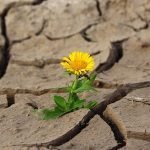
a little yellow flower growing from cracked, dried up mud
Podcast
Andrew

Ashes, Dust, Tears, and Laughter

This is a short update after a really intense week. I have been serving as a chaplain at a local hospital, and the experience has been so intense, I just had to share what it’s like. (Don’t worry, it isn’t all sad, but it IS powerful). Some brief notes from the podcast episode: Ash Wednesday – “According to Rabbi Bunim of P’shiskha, everyone should have two pockets, each containing a slip of paper. On one should be written: I am but dust and ashes, and on the other: The world was created for me. From time to time we must reach into one pocket, or the other. The secret of living comes from knowing when to reach into each. The quandary of interfaith chaplaincy to a variety of people Dispensing wisdom vs serving             Rachel Naomi Remen’s article: Healing vs Fixing vs Serving How to pray – when that’s something that’s been hard for me to do in the past.             Ironically, it hasn’t been that hard with patients.

Read More »
unlearning everyday racism
Podcast
Andrew

Unlearning Everyday Racism

I recently spoke with Kalissa Scopes of Unlearning Everyday Racism. This was, at times, an emotional interview (for me). Not to spoil this, but toward the end of our conversation I ask Kalissa what she’s most afraid of. What she answered was profoundly moving.

Read More »
Blog Posts and other special features
Nikki Haley
Blog
Andy

Race & Ethnicity: our Favorite Fairytales

This entry is part 3 of 5 in the series Immigration

What is race? What is ethnicity? The photo above provides the perfect opening to this story. Is the woman in the photo White? Latina? Middle Eastern? If you don’t know her, her name is Nimrata Randhawa, now known as “Nikki” Haley — daughter of Sikh immigrants from India and U.S. Ambassador to the United Nations. Ms. Haley is considered by some to be the consummate American success story—self-made, politically conservative, and white. If we look deeper, though, the things we tell ourselves about race and ethnicity aren’t quite so neat and tidy.  Photo credit: Wikipedia As before in this series, I am curious about both the apparent stories as well as the hidden ones. As I sit with the questions above, I can feel myself heading down one of two paths. Having to decide, I am reminded of words from the sage and prophet Yogi Berra who once said, “When you come to a fork in the road, you should take it.” And so, not being sure what that actually means, I will attempt to explore both paths. Everyone knows what race is, right? Race is the part of humans that makes us different from each other… but different in a group. Black is an example of a race. Members of the black race share certain traits like skin color, eye color, texture of hair, and athletic ability. Wait. That’s actually not true. Those are just traits that come to mind immediately because they’re part of the surface story. Digressing for a moment, this is why I have come to view surface stories with suspicion – or at least not be lazy and do the work needed to make a decision. Black, White, Asian – all are stories more than they are races. If I take a moment to look beyond the surface story, I know that the hidden story (or not-so-hidden, actually) is that there is no reliable definition of any race. In fact, hair and eye color, and skin and physical characteristics are more accurately called phenotype and even within what some might call a race, there are many different phenotypes. Being lazy lets me classify people by race. The moment I cease being lazy, though, and start exploring those classifications, I see how they begin to fall apart. Is a person with dark skin black? What about a person with light brown skin? What effect does the language they speak have? Are they still black if they speak English with a British accent? If they speak Spanish? If they speak Japanese? Is a person with light skin white? How light does the skin have to be? What about a person with a skin condition that makes their skin light, but they have curly hair and a broad nose? At one time, the Irish ancestors I almost certainly have weren’t considered white. Now they are. Which is correct? Paraphrased from Dictionary.com: race noun a socially constructed category of identification based on physical characteristics, ancestry, historical affiliation, or shared culture: What about ethnicity? ethnicity [eth-nis-i-tee] noun, plural ethnicities. an ethnic group; a social group that shares a common and distinctive culture, religion, language, or the like ethnic traits, background, allegiance, or association: Reading the above definitions, I sense some ambiguity and overlap. That’s because race isn’t real. Race is a story – a narrative – constructed and told by human beings with different motivations and needs over time. What becomes interesting is when we start to confuse these stories. Immigration does that. When entire groups of people move from one culture to another, they often disrupt the narratives that worked so comfortably before. Dominicans who migrate to New York offer an example of this. Are they Black? Are they Hispanic? If they happen to speak English and have light skin tone, does that mean they are White? The needs of the original societies (pre-immigration) produced some narratives. It is those needs that interest me more than the narratives. Do we need to belong to a group? Why? What is it about being human that puts us in need of relationship? In order to belong to a group – something I can call “us” – there must be a “not us,” no? In religious studies, we call this approach apophasis – defining God in terms of what God is not. By establishing that God is not cruel, or not male, or not weak, I begin to get a picture of what remains and therefore must be God. In similar apophatic terms, I offer that race is one way to tell a story about who is not us so that we can get to the business of creating a story about who is us. To understand complicated narratives like race and ethnicity, we have to begin by understanding the characters in them. Race and ethnicity are ready-made stories that provide a sort of framework into which I can insert myself and try to make sense of the world. The danger, is that those ready-made stories are deeply flawed and cause more problems than they solve. What if there were a way to make sense of the world some other way? In the next installment, we’ll explore another concept that trys to do that, and is also fraught with as much uncertainty. Religion. Immigration Immigrant or expat? It’s about power. Why do Immigrants bring their religion with them?

Read More »
Blog
Andy

Immigrant or expat? It’s about power.

This entry is part 2 of 5 in the series Immigration

Immigration Series: Part II In the previous post, I talked about the word immigrant as a label for people who move into a country or place. Like all language, ours contains subtlety and nuance. Use of the word immigrant, though it may seem straightforward, implies a certain set of assumptions though, no? Hearing a sentence like: “Jessica was interested in issues of immigrant rights” or “The immigrants came and took our jobs,” one can pretty readily make certain guesses about context – about what kind of person Jessica might be, or what the worldview of the person making the second statement might be. As I mentioned in the previous post, I love a good hidden story. What one sees on the surface might be interesting or a curiosity, but looking deeper is where one finds the thrilling, the motivating, and the real story – the hidden one. In this case, I want to talk about power. Who has it? What are they doing with it? How does power influence or color or shade the ways that people perceive the world? I offer one word for your consideration: Expat. Expatriate. Wait, does that count as two words? Never mind. I, the author, having control of this particular narrative, can do whatever I damned-well please and I say it is one word. See there? It’s about power. expatriate adjective (ɛksˈpætrɪɪt ; -ˌeɪt) resident in a foreign country exiled or banished from one’s native country: an expatriate American noun (ɛksˈpætrɪɪt ; -ˌeɪt) a person who lives in a foreign country Do you know what the difference between an expat and an immigrant is? immigrant noun [im-i-gruh nt] a person who migrates to another country, usually for permanent residence. an organism found in a new habitat. adjective of or relating to immigrants and immigration: a department for immigrant affairs. As decided unilaterally by me, an expat is white, speaks English as a primary language, and has (or is assumed to have) a certain amount of wealth at his disposal (yes, I used the masculine because an expat is likely a man). Expat (or expatriate) is a label one might choose for oneself to connote privilege – to imply a degree of choice in one’s situation. An immigrant is likely brown (or other-than-white) skinned, speaks a non-English primary language, is presumed to have less money and therefore less choice about where to live. As you see from the definitions above (gleaned from the academically rigorous dictionary.com), an immigrant can also be an organism found in a new habitat. I’m unaware of any expat organisms, but there must be some in existence. They’re likely multi-celled complex organisms, highly-evolved, and Harvard, Yale, or Cambridge-educated, as opposed to the single-celled, more helpless types found in immigrant organism communities. Because I love a good hidden story, I have particularly enjoyed unpacking these particulars, as I do find the nuance of language useful (if painful). Power, the hidden story behind this post has such an impact on the ways we view the immigrant narrative. At this point in human history on earth, power is fairly concentrated in the hands of a relative few people. Whatever you think is the intent behind that concentration, its effect has been to characterize the world in a hierarchy of wealth & privilege with countries in the Global North – and particularly the North Atlantic at the top. As those powers fought each other for primacy, they colonized the rest of the world. A meta-narrative emerged to support this system – this way of seeing the world, and we are the living legacy of that colonization. The narrative is still in place, serving as a kind of lens through which we experience the world and our global culture is deeply influenced by it. As I write this, I find myself wondering if (or how) this narrative serves us. Was it useful at one time to assume that there should be this hierarchy of wealth and privilege? Is it useful today? Are there other narratives in which power plays a different role – and how might different narratives serve us? Though I sometimes (attempt to) use humor as a tool because I believe that stories are like bread – they need leavening, there is nothing funny about human suffering. Any time someone has power over, then it is incumbent upon that person to use care in exercise of that power. May we be mindful of the ways in which we have power over someone. May we use that power in service of those without it. As I sit with questions of power from this week, my mind looks ahead to two more concepts: Race and ethnicity. Immigration “Immigrant”: What’s in a name? Race & Ethnicity: our Favorite Fairytales

Read More »
immigration wordcloud
Blog
Andy

“Immigrant”: What’s in a name?

This entry is part 1 of 5 in the series Immigration

This is the first in a 5-part series about immigration: the issue, and the very real human stories behind that issue. Inspired by work in a course called Promised Lands and Immigrants for my Master of Divinity degree at Starr King School for Ministry, I wanted to engage further with this subject. Today, I’d like to unpack the basics. I’ll explore why we choose to use the label immigrant. After all, who exactly is an immigrant but a person who chooses (or is forced) to relocate from one place *into* another. I use the awkward phrasing *into* because immigrant translates from the Latin meaning specifically “to move (migrate) in” to a place. Thinking in terms of who might assign this label to someone (and why) can become an enlightening exercise. Explicitly speaking, someone could call themselves an immigrant, though at least in the United States, one would be hard-pressed to imagine this happening. If I moved from Hungary to the U.S., I could imagine thinking of myself as a dozen things: a Hungarian, a European, a poet, a husband, or a doctor, but “immigrant?” Probably not. Implicitly speaking, though, we begin to understand the multiple layers at play here. While someone may be technically an immigrant, there is likely little motivation for them to think of themselves as such. It’s more likely that someone in the host society – on the receiving end of this move between countries or cultures – would use a word like immigrant to categorize a person. When we use labels for people, it makes it easier for us to make sense of the world. The world is complicated, right? My human brain needs to know if someone is a friend or foe, if they represent competition for scarce resources like food or jobs. I want to know if they are the much-needed help I’ve been desperate for if there aren’t enough hands to do the work that needs to be done. Emigrants are leaving. Immigrants are coming. What is of less concern is that both are people. People emigrating. People immigrating. What’s interesting to me is the hidden story. Why do we need words like immigrant? We already have words for people. Why not just use names? (Bill is moving here, or Oichi is coming) or labels like families, or Catholics, or farmers? The obvious story is that there must be something significant about the combination of a 1) person doing this 2): thing – moving between cultures – that is SO SIGNIFICANT that it becomes important to identify them solely in terms of what they are doing. Can you think of a time when you have been labeled by someone in these terms (by an action you have taken, or a choice you have made)? Have you been a conscientious objector? A voter? A volunteer? Perhaps the most common example I can think of is associating our label – our identity – with our work. I am a banker, or a landscaper, for instance. Those are often self-assigned labels, chosen for whatever reason, but typically ones that provide some positive sense of identity. What fascinates me is this notion that immigrant is a label often assigned by someone else. Labels: They help us understand the world in terms of our personal narrative – a story we each tell ourselves about how the world works and why things are the way they are. There is also a larger meta-narrative that is woven together into a tapestry we call culture.The issue of who controls that meta-narrative depends on who has the power in a given situation. It is that power dynamic that we will talk about next. For now, I hope I have given you some food for thought and questioning – if only a little – about labels, about the human desires that cause us to move ourselves great distances and at great hardship, and about power – who has it, how is it being used, and what effect that has on us all. Behind the obvious story is often a hidden one. Immigration Immigrant or expat? It’s about power.

Read More »

“So, what do you do?” I HATE that question…Or do I love it?

  I just quit my job. A perfectly good one. In fact, a really great one for a really great company. See, every five or so years, I do this. I change jobs. Like clockwork. When I was in my teens and twenties (a hundred years ago), the job would usually change FOR me (I would get fired). More recently, I’ve learned to recognize when something isn’t the right fit anymore and I move on before I wear out my welcome. I haven’t always known why, but I have always moved through experiences like chapters in a book. Like clockwork, I’ve found my next something and taken to it with all the passion of a new lover — eager to learn how this new skill or experience smells and tastes; what makes it unique and special. Because of my insatiable thirst for learning a new something, I have found myself often looking for a master under which to apprentice, and then immersing completely in that new something –– drinking in every detail, and asking whyuntil one or both of us were exhausted by teaching & learning. This process feels familiar each time, yet exciting and new as I progress from eager student to apprentice to journeyman. Sometimes I make it to expert. Most times I don’t. One thing is certain though: If I stay beyond this point, I begin to get anxious and feel like I am in a rut. An increasingly insistent inner voice keeps saying that there are other topics to absorb and life is fleeting. If I stay too long, I find myself casting longing glances over the shoulder of my chosen somethingat another seemingly more alluring one. Every time, though, I’ve come away enriched by these experiences. Twenty years ago, I was worried that there was something wrong with me. Fast forward to today and I understand that there’s nothing wrong, its just that I’m not cut out to specializein one thing. Not to toot my own horn, but I’m good at all kinds of things. There’s a good chance that you are too – if you’re a Polymath. This is a new term to me, but it means someone who is good at many things. [Greek: poly (many) + manthanein (to learn)]. It is important to note that there is always someone smarter than the Polymath at a given subject. The specialistis the other extreme – spending long periods of time, sometimes an entire life – developing and curating a deep knowledge of a given discipline. I have the ultimate respect for specialists. They are what I can never be. Let me try to provide you some color and context: I can write fairly well, though I have lots to learn. I can communicate — REALLY connect — with a ridiculously wide array of people. I learn languages (and even accents) well. I love to learn. I love to immerse myself in new experiences and imagine what it must be like to live someone else’s existence, yet make it myexistence. I learned, or taught myself how to setup and maintain computer networks, write code for websites, pick locks, crack safes, and decipher complex financial statements. I learned how to weld, how to do plumbing and electrical work. I can coach and motivate teams of highly successful salespeople, rappel down the face of a cliff, sail a sloop, and rebuild a car engine. I qualified as an expert marksman with my M16A2 assault rifle and can shear sheep pretty well. Because I’ve tried to exist and conform in a society that expects you to specialize in something (remember that cocktail party question: So, what do you do?),I’ve stayed in and around business and finance for the better part of 20 years. As a result, my disparate collection of knowledge lines up heavily around subjects like finance, organizational development, strategy, and finding efficiencies in operations. Back to the I just quit my job part. One other thing I’ve always been comfortable with is risk. It’s not that I have a masochistic need to inflict poor credit ratings and ramen noodles on myself. Quite the contrary. I always hope for the best each time I take a leap of faith out the nearest window. I’ve mostly been rewarded with positive results, but that doesn’t mean it isn’t scary. Part of this particular leap of faith is writing a book about what I’ve learned – at least in the context of how to help you turn dreaming into doing(I don’t suppose there’s a huge audience awaiting my book about sheep shearing!). In this process, I hope to start conversations and make connections that lead to the next chapter on my path. Is your idea part of that path? I look forward to learning more about the concept of the Polymath (a.k.a. the Renaissance Man or the Generalist). Now that I know that it is a thing, I feel much better. Can you hear it now? “So, what do you do?”  “I’m a Polymath” “Wow, that sounds really boring. Sorry, but I hate math. More wine?”  Here’s a TEDx talk about Polymaths  

Read More »