Episodes of my podcast series: 99 - a Weekly 9-Minute Spiritual Journey
Bright warm closeup of droplets of water on an orange/peach flower petal
99

The One Person You Must Meet

This entry is part 7 of 33 in the series 99: a journey

I want to share one of my favorite stories. I know it from the Taoist tradition, though maybe it has other roots as well. There was an old farmer who had worked his crops for many years. One day his horse ran away. Upon hearing the news, his neighbors came to visit. “Such bad luck,” they said sympathetically. “Maybe so,” the farmer replied. The next morning the horse returned, bringing with it three other wild horses. “How wonderful,” the neighbors exclaimed. “Maybe so,” replied the old man. The following day, his son tried to ride one of the untamed horses, was thrown, and broke his leg. The neighbors again came to offer their sympathy on his misfortune. “Maybe so,” answered the farmer. The day after, military officials came to the village to draft young men into the army. Seeing that the son’s leg was broken, they passed him by. The neighbors congratulated the farmer on how well things had turned out. “Maybe so,” said the farmer. The theme of today comes from the Arabic Al-Aziz. The meaning I’m using for that term is a special kind of strength. (Don’t you just love that there are so many variations of these qualities each week?) This is the kind of strength that the farmer had in the story. It’s mighty, sweet, and also beyond praise or blame…. you know… dualism. You have to know someone like this. Either in your own life, or from a book or movie… someone who is just …. steady, but in a kind way. If you think you don’t know someone like this, I offer that it might actually be YOU. In fact, I want you to imagine for a minute that it IS you. If you can, think of a moment when you were confident, kind, poised…. you were in the zone and feeling clear. Have you located that feeling? Ok. Hold on to it. Now if you can, I invite you to bring back a painful moment – maybe the worst thing that has ever happened to you. … but be gentle with yourself. Only what you feel you can handle at this moment. Do you have this feeling or this difficult moment? Ok. Now almost like these two feelings are two separate people, or two versions of you, I invite you to introduce them to each other. Confident, poised, clear you, meet the other you that’s feeling whatever you’re feeling. Watch the two you’s as they recognize each other, and slowly start to reach out and test to see if each is real. Notice what this meeting feels like. Is it cautious? Afraid? Joyous? Comforting? Still just observing, and noticing… Now as the two versions of you get more familiar with each other, they might realize that they’re both you—different, but also the same and as they notice this, they might start to move closer and closer, and eventually start to overlap and merge. Now they are one. The scared, or sad you is still there. The calm, confident, poised you is still there as well. Now they’re all combined and there is this kind of expansion that happens. Like that sadness and the scars from the bad experience weren’t wasted, but somehow feed into this inner strength that almost feels …. like it’s precious and joyous and sweet like you’ve never known. Imagine that those different versions of you were like two drops of water next to each other on glass. As they touch, each is absorbed into the other… The water from each drop is still there, but now they’ve made something new that at the same time is both drops -and also a new, expanded one. Do you ever feel like there are different parts of you? I used to feel like that. For instance, there was a confident, energetic version of me that showed up sometimes. Other times, there was a worrying version of me that was never good enough. There was a me who was sad and bitter from a failed relationship, certain it was all my fault. And so on, and so on… In truth, one day I realized. These are ALL me. The sadness and hurt is still there, but it has met the other parts – including the confident me, and the me who loves bad puns and wordplay, and all the other ones. The result, I’m still trying to figure out – I’m still getting to know this expanded drop of water that contains all of those previous versions. I can tell you that there is a certain amount of sweetness to the experience – like the farmer might have felt each time his fortunes seemed to swing like a pendulum, and the people around him were swept up in the drama. So, my friend, there’s someone divine I’d really like you to meet. Say hello to… yourself. 99: a journey Some Advice from Job about your Suffering Tending the Garden of Your Soul


Read More »
Back of child wearing hoodie looking at lush garden
99

Tending the Garden of Your Soul

This entry is part 8 of 33 in the series 99: a journey

I grew up on a small farm in the U.S. That was a long time ago, but I still remember like it was yesterday. We had a big garden and I was given a little corner of it for myself. I would spend hours out there in the spring, getting my garden ready. When I was really young, my parents would till it for me, but as I got older, I did it myself. I would start by breaking up the hard clay soil, then add some compost and some sand to loosen up the dense earth so it would drain properly and the plants would have enough nutrients to grow…. and grow they did! I won a ribbon at the county fair with the cabbages, cucumbers, and I think cauliflower I grew one year. I got good at knowing how to fuss over my little plot just enough, and to let the plants know that they were loved. Sometimes I think that it was all the attention that made them flourish as much as it was the mechanical act of cultivating. Today’s subject comes from a word that in the Arabic, I’m told, means inner knowledge – the kind that comes from cultivation. As I read the prompt for our time together and started to write this episode, my mind was full of gardening metaphors; Here’s one: think of an onion. Imagine that your essence—whatever it is that makes you unique—is at center of a big, sweet onion, and the process of growing up and maturing is like starting at the outside of that onion, and peeling away layer after layer, one at a time, until you discover what’s really YOU. Some people seem to instinctively know who they are from the moment they are born. I call these people, “old souls.” Others of us aren’t so lucky. Some of us have to do the hard work of discovering what’s inside the onion – crying our way through layer after layer in search of meaning. Getting back to my little garden, I noticed that as I tilled the soil and took care of it more and more – spent time literally IN IT with my hands, I grew to know it better than anywhere else on earth. My INtention was turned into ATtention and this cultivating I did produced results. It was kind of amazing when I first realized that I could sense what the garden needed. What the plants needed. I knew if it was a little too dry and needed water. I knew when to stop watering. I knew when the latest juicy cucumber, that wasn’t ready the evening before, nearly jumped to get my attention the next morning. I’m ready! Pick me! Pick me! What if you could cultivate the garden of your own being like this? What if you spent a lifetime down on your knees with it – hands sinking into the dark, nourishing soil, fussing, trimming, tending. What would it be like to pay this kind of attention to yourself? Carl Jung said, “People will do anything, no matter how absurd, in order to avoid facing their own souls. One does not become enlightened by imagining figures of light, but by making the darkness conscious.” The darkness he’s talking about: Is it akin to the soil of your garden? What IS your darkness? As much as I romanticize the rich, black earth that made my garden grow, I know what the blackness comes from. I know what it is that nourishes prize-winning cucumbers. Death and dying and decay. Just like the cucumbers feasted on atoms and molecules that had been previously other plants and animals, your own spirit grows in symbiotic relationship. Think of the wisest, most loving, most patient person you know. Those qualities are like fruits. Fruits don’t just appear from nowhere. They need nourishment. Wisdom is the fruit of the mistakes of ignorance. Love is a fruit borne of suffering and rejection and fear. Patience grows best in soil nourished by decaying longing. How long since you have been in the garden of your soul? How is it? Overworked and exhausted? Wild and overgrown with brambles? Lush and green with new life? If you’re feeling triggered by this, it’s okay to walk away and come back later. Your garden will still be there. Sometimes it just needs to be left alone. But sometime when you feel curious, go into your garden and just look around. Notice what’s there without judgement. Get down on your knees and feel the soil in your hands. There might be a hard crust on top that you have to break through, but underneath that is where the magic happens. All the little deaths and big ones you have suffered were not in vain. They’re there—slowly decomposing into their component parts so something amazing can grow. You. 99: a journey The One Person You Must Meet Discover the Patience of an Ant

Read More »
Pic of people from high above looking like ants
99

Discover the Patience of an Ant

This entry is part 9 of 33 in the series 99: a journey

Are you always setting goals? Always striving for something? Are you certain that you’re ALMOST THERE, and when you finally get that one thing or do that one thing, THEN you will have arrived?? No? Good. Because that makes one of us who knows the secret here. Being an interfaith student and soon-to-be minister, I’ve come across more traditions than I can count who all say something about today’s topic – to endure. Part patience, part equanimity, part acceptance, where we’re going today is well – nowhere. Because *always going somewhere*  is exactly the point. I don’t know about you , but from as early as I can remember, I’ve been taught that I should have goals—that I should strive to be better. I’ve got to out-hustle the next guy, work harder, earn more, grow, grow, grow. There is a chance that growing and striving isn’t really all it’s cracked up to be. Here’s a series of questions: What about appreciating what’s already there – and will be gone in the blink of an eye? What if part of what it means to be human is to complain? About how I threw a party for fifty people and only ten showed up? About how it’s too cold or too hot, or the world is too hateful, or I don’t make enough money for how hard I work? Yes, there are trials and bad things happen. All the time. And… in the midst of bad things happening, good and beautiful things are happening as well. The patience we’re talking about today is wise and ageless patience. It doesn’t deny your suffering. Your suffering is real. The thing is, though, suffering is part of this existence. When we do everything in our power to minimize it or avoid suffering, aren’t we kind of just fooling ourselves? Henry David Thoreau said, “It’s not enough to be busy; so are the ants. The question is: What are we busy about?” There’s something to consider. What are we busy about? It’s funny that this quote found me as I was writing this, because I was just thinking about ants. I think about a lot, actually. Where I live, in the summer, ants are everywhere… mostly on the sidewalks. As I walk around, I come across them every few feet. Whole colonies of them, just furiously doing whatever ants do. They seem so….. busy… I try not to step on them. (I’m that person who’s dodging and weaving around at random beside the street. If you wonder what that’s about, I’m trying not to step on the ants). So what ARE they doing? Is this deeply satisfying work they’re doing? Do you think they come home at the end of a shift and rub their sore antennae and gripe about the young ants just don’t work as hard? Are there little ant spiritual retreats where they go and study the ways of the ant-cestors (sorry, I couldn’t resist). Seriously though… Some of the religions I study are centered around a God or Divine consciousness that might observe us like we observe ants. What must that be like? Is God trying hard not to step on us? Does she wonder what all the fuss is about? Why we scurry and strive and make ourselves sick trying to build something that can’t be seen? I imagine that if God notices us at all, they might lovingly see our suffering and wish we could take comfort in this eternal patience. Knowledge that we are born, we live our lives, and we die, all in predictable, repeating patterns. If God could speak, God might remind us that we already have what we need on the day we are born. They might remind us that if there is any scurrying and striving to do, we might consider striving to know ourselves. To meet ourselves for the first time, and to spend a lifetime learning to appreciate things just as they are – rather than how they could be. None of this is to say we ought just spend our lives on the proverbial couch. Rather, What if you got to the end of this podcast and turned off your headphones and just looked around you – IRL – at what’s there? I don’t know about you, but I do this thing where I strive for the future and long for the past. Rarely, though, do I appreciate the present. When I had a big house and a fancy job and car and was unbelievably busy, I remember wondering what the heck had happened. Thinking back to when life was so simple – when I had a tiny apartment with hardly any furniture and a junky car. Some of my best memories came from that time when life WAS simple. And beautiful. It’s those things right now too. You are amazing. Whether you change or not. Whether you strive or not. Whatever you do. I bid you patience, my friend. Timeless, loving, humble patience. Not only will you get where you’re going – you’ve already arrived. 99: a journey Tending the Garden of Your Soul Aspire to Kindness like Dumbledore

Read More »
Harry Potter book lying on a table surrounded by autumn leaves, and open to Dumbledores Army chapter
99

Aspire to Kindness like Dumbledore

This entry is part 10 of 33 in the series 99: a journey

I’m speaking to the part of you that is lonely. The part you don’t let anyone see because it’s just too painful. I’m talking to the part of you that was unkind, or dishonest, or hateful. I’m talking to that part of you that was there in the moments you’re least proud of. Maybe even ashamed. From as far back as you can remember, you say you’ve felt loved and welcome in this life…. Mostly. But in truth, you wonder if that love is conditional. I mean, you’re allowed in the group – the family – whatever – as long as you play by the rules and behave like you’re’ supposed to. Whatever that means. What about that other part of you? What would it be like if you could bring your whole self? What would it be like for ALL of you to be out in the open? What would it be like to be loved unconditionally? That’s where we’re going today on our journey. I just read something very personal from someone I admire deeply. They’ve spent their entire life fighting – for two seemingly opposite things. On one hand, there’s this deep desire to be welcomed…. to be seen and loved without condition. Without condition. Warts and all. BREATHE Holy WOW. What would that be like? How amazing? I’m getting chills just thinking about a love so big, so pervasive, that says, “You’re human…. there is nothing a human can do, think, or say that diminishes you.” On the other hand, they’re doing what we all do sometimes – filtering. Holding back. Because that one thing I did… well…. nobody needs to see that. I mean seriously, that was the lowest of the low moments in my life. If I let you see it, then everything else about me is colored by it, no? That’s just it. The sort of love and kindness and mercy that we’re in company with today don’t care what you’ve done. This is the sort of  kindness that infects you when you least want it. You know what I mean? That friend that comes when you’re at rock bottom. “GO AWAY! Leave me alone!” you say – and you mean it. And You secretly hope they don’t. Because as much as you don’t want what they’re bringing, you need it. I told my twelve-year-old daughter about today’s topic and asked her what she thought it meant… this kind of fierce, unconditional love and kindness. She blurted out, “Dumbledore!” What? “Dumbledore. You’re describing the feeling I get whenever Dumbledore shows up in Harry Potter. It’s all in his eyes, ya know – it’s the strong kind of kindness and love, not the weak kind.” Of course, I pretended that I could have come up with something half this wise. There’s a song I sometimes use in times of trouble. Comfort me. Comfort me. Comfort me, oh my soul. Comfort me. Comfort me. Comfort me, oh my soul. Then you change out the word comfort and repeat. Things like: Speak to me, Speak to me, Walk with me, Protect me, and so on. It’s funny. The first time I heard it was on an election night when some people were shocked at the outcome, and had real fear about what was going to happen. Not knowing what to do, they came to a neighborhood house of worship that had its doors open and hundreds of candles lit outside on the entrance steps. About twenty people gathered at first and mostly sat together in silence, just needing company, but having that GO AWAY! feeling. Someone started that song quietly, and in just a few moments, everyone there started to join in. Tears were streaming, more people were packing into the small space, and no one had to say ANYTHING else. That room felt like being steeped in a tea of kindness and care and that’s what we all did. I later learned that the same song had been sung in New York on 9/11 and in the days after when people just needed this kindness to push back against the dark. People can bring it to you. Music can bring it to you. Dumbledore can bring it to you… It’s kind of like spiritual first aid. Here’s the part that really gives me hope. You have the power to bring it to others. You’ve already done it. Someone has been trying to have a bad day or to hate themselves and the whole world and along you’ve come and RUINED IT! In Islam, this is one of the traits of the Divine and some say it works the same way steel is made. You know steel? The metal – mostly iron, but stronger because it isn’t brittle. It’s been seasoned by other ingredients and then undergone a series of shocks of heat and cold. You’ve been through your own cycles of shocks and recoveries. Like steel, you’re stronger now. Unlike steel, you have the ability to share this transformation. Take your own strength and kindness and infect others. Start an outbreak. Those around you are going through their own painful process of being tempered by this life. Be their Dumbledore. Infuse them with a compassion and understanding they’ll want to reject, but can’t. Let them feel that there is nothing they can do that is beyond forgiveness. Nothing you are and nothing you do is beyond love. Nothing. 99: a journey Discover the Patience of an Ant Don’t Forget this Advice from the Buddha

Read More »
Recent Episodes of my Podcast. Interviews, random musings.
Head and shoulders photo of a smiling Ann Marie seated on a beige sofa against a calm, clean neutral-colored background Photo is taken from slightly above.
Podcast
Andrew

Raising Sparks: An Interview with Ann Marie Coletta

Welcome to another special Interview Episode of Prolificate where we get to hear from Ann Marie Coletta, the fierce and authentic founder of Raising Sparks Interfaith Ministry in one of San Francisco’s toughest neighborhoods, The Tenderloin. Ann Marie is one of the most moving interviews I’ve done, and for good reason. She has a way of sharing her experiences – which are incredible and can be a little scary – with a gentleness and care that’s unlike anyone you’ll ever meet. She has been there, and done that for over twenty years as an all-star social worker, practicing Zen Buddhist, and a recovering alcoholic who tells it like it is. I hope you appreciate this as much as I did. Enjoy. If you want to connect with Raising Sparks, you can find their website (coming soon at the time I’m writing this) at https://raisingsparksinthestreets.com/. Their phone number is (415) 933-5955 or email raisingsparksinthestreets@gmail.com Blessings to you for listening and caring. Blessings to Ann Marie and those she is walking with. Don’t forget, that a prolific world includes each and every one of us. May we both be encouraged by this story. Go out into the world in peace and have courage Hold on to what is good Return to no person evil for evil. Strengthen the fainthearted, Support the weak. Help the suffering, and honor all beings. Including you.

Read More »

Notes from the Field: Elation and Disappointment

I keep making these recordings as I leave the hospital to capture what I’ve experienced. While I cannot share any identifying details to protect patient confidentiality, it feels important to remember these experiences. Today, I realize that I have a favorite patient – even though you’re not supposed to. The reality of the situation felt really raw, so of course, I had to record it. Turns out Chaplains are people too. 🙂

Read More »
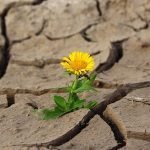
a little yellow flower growing from cracked, dried up mud
Podcast
Andrew

Ashes, Dust, Tears, and Laughter

This is a short update after a really intense week. I have been serving as a chaplain at a local hospital, and the experience has been so intense, I just had to share what it’s like. (Don’t worry, it isn’t all sad, but it IS powerful). Some brief notes from the podcast episode: Ash Wednesday – “According to Rabbi Bunim of P’shiskha, everyone should have two pockets, each containing a slip of paper. On one should be written: I am but dust and ashes, and on the other: The world was created for me. From time to time we must reach into one pocket, or the other. The secret of living comes from knowing when to reach into each. The quandary of interfaith chaplaincy to a variety of people Dispensing wisdom vs serving             Rachel Naomi Remen’s article: Healing vs Fixing vs Serving How to pray – when that’s something that’s been hard for me to do in the past.             Ironically, it hasn’t been that hard with patients.

Read More »
unlearning everyday racism
Podcast
Andrew

Unlearning Everyday Racism

I recently spoke with Kalissa Scopes of Unlearning Everyday Racism. This was, at times, an emotional interview (for me). Not to spoil this, but toward the end of our conversation I ask Kalissa what she’s most afraid of. What she answered was profoundly moving.

Read More »
Blog Posts and other special features
Nikki Haley
Blog
Andy

Race & Ethnicity: our Favorite Fairytales

This entry is part 3 of 5 in the series Immigration

What is race? What is ethnicity? The photo above provides the perfect opening to this story. Is the woman in the photo White? Latina? Middle Eastern? If you don’t know her, her name is Nimrata Randhawa, now known as “Nikki” Haley — daughter of Sikh immigrants from India and U.S. Ambassador to the United Nations. Ms. Haley is considered by some to be the consummate American success story—self-made, politically conservative, and white. If we look deeper, though, the things we tell ourselves about race and ethnicity aren’t quite so neat and tidy.  Photo credit: Wikipedia As before in this series, I am curious about both the apparent stories as well as the hidden ones. As I sit with the questions above, I can feel myself heading down one of two paths. Having to decide, I am reminded of words from the sage and prophet Yogi Berra who once said, “When you come to a fork in the road, you should take it.” And so, not being sure what that actually means, I will attempt to explore both paths. Everyone knows what race is, right? Race is the part of humans that makes us different from each other… but different in a group. Black is an example of a race. Members of the black race share certain traits like skin color, eye color, texture of hair, and athletic ability. Wait. That’s actually not true. Those are just traits that come to mind immediately because they’re part of the surface story. Digressing for a moment, this is why I have come to view surface stories with suspicion – or at least not be lazy and do the work needed to make a decision. Black, White, Asian – all are stories more than they are races. If I take a moment to look beyond the surface story, I know that the hidden story (or not-so-hidden, actually) is that there is no reliable definition of any race. In fact, hair and eye color, and skin and physical characteristics are more accurately called phenotype and even within what some might call a race, there are many different phenotypes. Being lazy lets me classify people by race. The moment I cease being lazy, though, and start exploring those classifications, I see how they begin to fall apart. Is a person with dark skin black? What about a person with light brown skin? What effect does the language they speak have? Are they still black if they speak English with a British accent? If they speak Spanish? If they speak Japanese? Is a person with light skin white? How light does the skin have to be? What about a person with a skin condition that makes their skin light, but they have curly hair and a broad nose? At one time, the Irish ancestors I almost certainly have weren’t considered white. Now they are. Which is correct? Paraphrased from Dictionary.com: race noun a socially constructed category of identification based on physical characteristics, ancestry, historical affiliation, or shared culture: What about ethnicity? ethnicity [eth-nis-i-tee] noun, plural ethnicities. an ethnic group; a social group that shares a common and distinctive culture, religion, language, or the like ethnic traits, background, allegiance, or association: Reading the above definitions, I sense some ambiguity and overlap. That’s because race isn’t real. Race is a story – a narrative – constructed and told by human beings with different motivations and needs over time. What becomes interesting is when we start to confuse these stories. Immigration does that. When entire groups of people move from one culture to another, they often disrupt the narratives that worked so comfortably before. Dominicans who migrate to New York offer an example of this. Are they Black? Are they Hispanic? If they happen to speak English and have light skin tone, does that mean they are White? The needs of the original societies (pre-immigration) produced some narratives. It is those needs that interest me more than the narratives. Do we need to belong to a group? Why? What is it about being human that puts us in need of relationship? In order to belong to a group – something I can call “us” – there must be a “not us,” no? In religious studies, we call this approach apophasis – defining God in terms of what God is not. By establishing that God is not cruel, or not male, or not weak, I begin to get a picture of what remains and therefore must be God. In similar apophatic terms, I offer that race is one way to tell a story about who is not us so that we can get to the business of creating a story about who is us. To understand complicated narratives like race and ethnicity, we have to begin by understanding the characters in them. Race and ethnicity are ready-made stories that provide a sort of framework into which I can insert myself and try to make sense of the world. The danger, is that those ready-made stories are deeply flawed and cause more problems than they solve. What if there were a way to make sense of the world some other way? In the next installment, we’ll explore another concept that trys to do that, and is also fraught with as much uncertainty. Religion. Immigration Immigrant or expat? It’s about power. Why do Immigrants bring their religion with them?

Read More »
Blog
Andy

Immigrant or expat? It’s about power.

This entry is part 2 of 5 in the series Immigration

Immigration Series: Part II In the previous post, I talked about the word immigrant as a label for people who move into a country or place. Like all language, ours contains subtlety and nuance. Use of the word immigrant, though it may seem straightforward, implies a certain set of assumptions though, no? Hearing a sentence like: “Jessica was interested in issues of immigrant rights” or “The immigrants came and took our jobs,” one can pretty readily make certain guesses about context – about what kind of person Jessica might be, or what the worldview of the person making the second statement might be. As I mentioned in the previous post, I love a good hidden story. What one sees on the surface might be interesting or a curiosity, but looking deeper is where one finds the thrilling, the motivating, and the real story – the hidden one. In this case, I want to talk about power. Who has it? What are they doing with it? How does power influence or color or shade the ways that people perceive the world? I offer one word for your consideration: Expat. Expatriate. Wait, does that count as two words? Never mind. I, the author, having control of this particular narrative, can do whatever I damned-well please and I say it is one word. See there? It’s about power. expatriate adjective (ɛksˈpætrɪɪt ; -ˌeɪt) resident in a foreign country exiled or banished from one’s native country: an expatriate American noun (ɛksˈpætrɪɪt ; -ˌeɪt) a person who lives in a foreign country Do you know what the difference between an expat and an immigrant is? immigrant noun [im-i-gruh nt] a person who migrates to another country, usually for permanent residence. an organism found in a new habitat. adjective of or relating to immigrants and immigration: a department for immigrant affairs. As decided unilaterally by me, an expat is white, speaks English as a primary language, and has (or is assumed to have) a certain amount of wealth at his disposal (yes, I used the masculine because an expat is likely a man). Expat (or expatriate) is a label one might choose for oneself to connote privilege – to imply a degree of choice in one’s situation. An immigrant is likely brown (or other-than-white) skinned, speaks a non-English primary language, is presumed to have less money and therefore less choice about where to live. As you see from the definitions above (gleaned from the academically rigorous dictionary.com), an immigrant can also be an organism found in a new habitat. I’m unaware of any expat organisms, but there must be some in existence. They’re likely multi-celled complex organisms, highly-evolved, and Harvard, Yale, or Cambridge-educated, as opposed to the single-celled, more helpless types found in immigrant organism communities. Because I love a good hidden story, I have particularly enjoyed unpacking these particulars, as I do find the nuance of language useful (if painful). Power, the hidden story behind this post has such an impact on the ways we view the immigrant narrative. At this point in human history on earth, power is fairly concentrated in the hands of a relative few people. Whatever you think is the intent behind that concentration, its effect has been to characterize the world in a hierarchy of wealth & privilege with countries in the Global North – and particularly the North Atlantic at the top. As those powers fought each other for primacy, they colonized the rest of the world. A meta-narrative emerged to support this system – this way of seeing the world, and we are the living legacy of that colonization. The narrative is still in place, serving as a kind of lens through which we experience the world and our global culture is deeply influenced by it. As I write this, I find myself wondering if (or how) this narrative serves us. Was it useful at one time to assume that there should be this hierarchy of wealth and privilege? Is it useful today? Are there other narratives in which power plays a different role – and how might different narratives serve us? Though I sometimes (attempt to) use humor as a tool because I believe that stories are like bread – they need leavening, there is nothing funny about human suffering. Any time someone has power over, then it is incumbent upon that person to use care in exercise of that power. May we be mindful of the ways in which we have power over someone. May we use that power in service of those without it. As I sit with questions of power from this week, my mind looks ahead to two more concepts: Race and ethnicity. Immigration “Immigrant”: What’s in a name? Race & Ethnicity: our Favorite Fairytales

Read More »
immigration wordcloud
Blog
Andy

“Immigrant”: What’s in a name?

This entry is part 1 of 5 in the series Immigration

This is the first in a 5-part series about immigration: the issue, and the very real human stories behind that issue. Inspired by work in a course called Promised Lands and Immigrants for my Master of Divinity degree at Starr King School for Ministry, I wanted to engage further with this subject. Today, I’d like to unpack the basics. I’ll explore why we choose to use the label immigrant. After all, who exactly is an immigrant but a person who chooses (or is forced) to relocate from one place *into* another. I use the awkward phrasing *into* because immigrant translates from the Latin meaning specifically “to move (migrate) in” to a place. Thinking in terms of who might assign this label to someone (and why) can become an enlightening exercise. Explicitly speaking, someone could call themselves an immigrant, though at least in the United States, one would be hard-pressed to imagine this happening. If I moved from Hungary to the U.S., I could imagine thinking of myself as a dozen things: a Hungarian, a European, a poet, a husband, or a doctor, but “immigrant?” Probably not. Implicitly speaking, though, we begin to understand the multiple layers at play here. While someone may be technically an immigrant, there is likely little motivation for them to think of themselves as such. It’s more likely that someone in the host society – on the receiving end of this move between countries or cultures – would use a word like immigrant to categorize a person. When we use labels for people, it makes it easier for us to make sense of the world. The world is complicated, right? My human brain needs to know if someone is a friend or foe, if they represent competition for scarce resources like food or jobs. I want to know if they are the much-needed help I’ve been desperate for if there aren’t enough hands to do the work that needs to be done. Emigrants are leaving. Immigrants are coming. What is of less concern is that both are people. People emigrating. People immigrating. What’s interesting to me is the hidden story. Why do we need words like immigrant? We already have words for people. Why not just use names? (Bill is moving here, or Oichi is coming) or labels like families, or Catholics, or farmers? The obvious story is that there must be something significant about the combination of a 1) person doing this 2): thing – moving between cultures – that is SO SIGNIFICANT that it becomes important to identify them solely in terms of what they are doing. Can you think of a time when you have been labeled by someone in these terms (by an action you have taken, or a choice you have made)? Have you been a conscientious objector? A voter? A volunteer? Perhaps the most common example I can think of is associating our label – our identity – with our work. I am a banker, or a landscaper, for instance. Those are often self-assigned labels, chosen for whatever reason, but typically ones that provide some positive sense of identity. What fascinates me is this notion that immigrant is a label often assigned by someone else. Labels: They help us understand the world in terms of our personal narrative – a story we each tell ourselves about how the world works and why things are the way they are. There is also a larger meta-narrative that is woven together into a tapestry we call culture.The issue of who controls that meta-narrative depends on who has the power in a given situation. It is that power dynamic that we will talk about next. For now, I hope I have given you some food for thought and questioning – if only a little – about labels, about the human desires that cause us to move ourselves great distances and at great hardship, and about power – who has it, how is it being used, and what effect that has on us all. Behind the obvious story is often a hidden one. Immigration Immigrant or expat? It’s about power.

Read More »

“So, what do you do?” I HATE that question…Or do I love it?

  I just quit my job. A perfectly good one. In fact, a really great one for a really great company. See, every five or so years, I do this. I change jobs. Like clockwork. When I was in my teens and twenties (a hundred years ago), the job would usually change FOR me (I would get fired). More recently, I’ve learned to recognize when something isn’t the right fit anymore and I move on before I wear out my welcome. I haven’t always known why, but I have always moved through experiences like chapters in a book. Like clockwork, I’ve found my next something and taken to it with all the passion of a new lover — eager to learn how this new skill or experience smells and tastes; what makes it unique and special. Because of my insatiable thirst for learning a new something, I have found myself often looking for a master under which to apprentice, and then immersing completely in that new something –– drinking in every detail, and asking whyuntil one or both of us were exhausted by teaching & learning. This process feels familiar each time, yet exciting and new as I progress from eager student to apprentice to journeyman. Sometimes I make it to expert. Most times I don’t. One thing is certain though: If I stay beyond this point, I begin to get anxious and feel like I am in a rut. An increasingly insistent inner voice keeps saying that there are other topics to absorb and life is fleeting. If I stay too long, I find myself casting longing glances over the shoulder of my chosen somethingat another seemingly more alluring one. Every time, though, I’ve come away enriched by these experiences. Twenty years ago, I was worried that there was something wrong with me. Fast forward to today and I understand that there’s nothing wrong, its just that I’m not cut out to specializein one thing. Not to toot my own horn, but I’m good at all kinds of things. There’s a good chance that you are too – if you’re a Polymath. This is a new term to me, but it means someone who is good at many things. [Greek: poly (many) + manthanein (to learn)]. It is important to note that there is always someone smarter than the Polymath at a given subject. The specialistis the other extreme – spending long periods of time, sometimes an entire life – developing and curating a deep knowledge of a given discipline. I have the ultimate respect for specialists. They are what I can never be. Let me try to provide you some color and context: I can write fairly well, though I have lots to learn. I can communicate — REALLY connect — with a ridiculously wide array of people. I learn languages (and even accents) well. I love to learn. I love to immerse myself in new experiences and imagine what it must be like to live someone else’s existence, yet make it myexistence. I learned, or taught myself how to setup and maintain computer networks, write code for websites, pick locks, crack safes, and decipher complex financial statements. I learned how to weld, how to do plumbing and electrical work. I can coach and motivate teams of highly successful salespeople, rappel down the face of a cliff, sail a sloop, and rebuild a car engine. I qualified as an expert marksman with my M16A2 assault rifle and can shear sheep pretty well. Because I’ve tried to exist and conform in a society that expects you to specialize in something (remember that cocktail party question: So, what do you do?),I’ve stayed in and around business and finance for the better part of 20 years. As a result, my disparate collection of knowledge lines up heavily around subjects like finance, organizational development, strategy, and finding efficiencies in operations. Back to the I just quit my job part. One other thing I’ve always been comfortable with is risk. It’s not that I have a masochistic need to inflict poor credit ratings and ramen noodles on myself. Quite the contrary. I always hope for the best each time I take a leap of faith out the nearest window. I’ve mostly been rewarded with positive results, but that doesn’t mean it isn’t scary. Part of this particular leap of faith is writing a book about what I’ve learned – at least in the context of how to help you turn dreaming into doing(I don’t suppose there’s a huge audience awaiting my book about sheep shearing!). In this process, I hope to start conversations and make connections that lead to the next chapter on my path. Is your idea part of that path? I look forward to learning more about the concept of the Polymath (a.k.a. the Renaissance Man or the Generalist). Now that I know that it is a thing, I feel much better. Can you hear it now? “So, what do you do?”  “I’m a Polymath” “Wow, that sounds really boring. Sorry, but I hate math. More wine?”  Here’s a TEDx talk about Polymaths  

Read More »